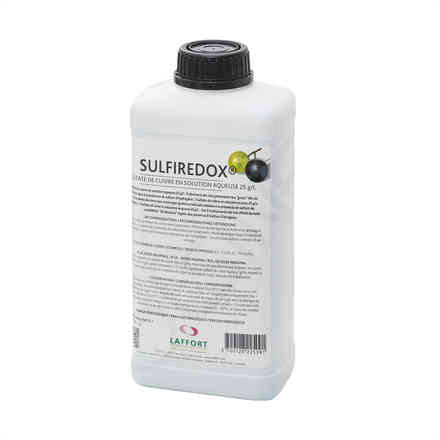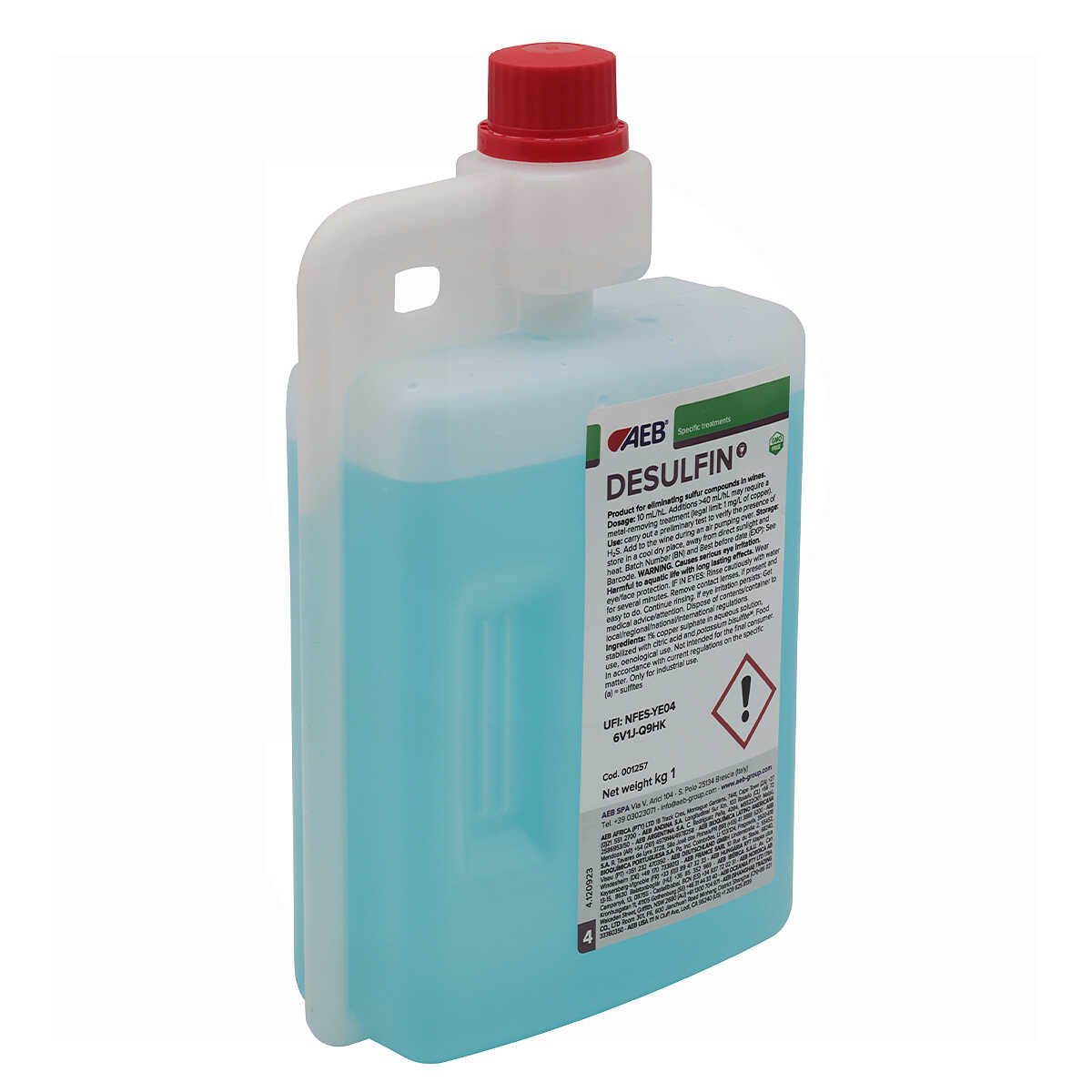
Desulfin (1 Kg)
Descrição
Desulfin (1 kg)
Desulfurizing agent for musts and wines
Hydrogen sulfide or sulfurous acid (H₂S), characterized by its typical rotten egg odor, is formed during fermentation as a result of the reductive activity of yeasts on sulfur-containing compounds. H₂S is normally used in the synthesis of sulfur-containing amino acids (cysteine and methionine). However, when produced in excess, it is released into the medium. The formation of H₂S is also related to musts that are poor in readily assimilable nitrogen, forcing yeasts to degrade proteins. In this case, H₂S is produced through enzymatic activity (cysteine desulfhydrase). To eliminate this defect, it is advisable to intervene as soon as possible with suitable additions of a copper solution such as Desulfin
The unpleasant odor caused by yeast-produced H₂S should not be confused with mercaptans, which develop in wines left on their lees after fermentation and have a characteristic garlic-like odor. In low redox potential environments, hydrogen sulfide can bind with alcohol molecules to form mercaptans (ethyl mercaptan). Wines showing reduced aromas generally have low copper content. The addition of 10 mL/hL of Desulfin, supplying 0.25 mg/L of copper, resolves these problems without exceeding the legal limit of 1 mg/L of copper. Studies by Ribéreau-Gayon et al. have shown that trace amounts of copper ions (a few tenths of mg/L) in red and white wines play a beneficial role in the development of bottle bouquet.
Composition and technical characteristics
- Copper sulfate in an aqueous solution stabilized with citric acid and potassium bisulfite.
Dosage
- 10 mL/hL. Additions above 40 mL/hL may require a demetallization treatment (legal limit: 1 mg/L of copper).
How to use
- Carry out a preliminary test to verify the presence of H₂S.
- Add to the wine during aerated pumping over.
Storage
- Store in a cool, dry place away from direct light and heat.
Packaging:
- 1 kg bottle
 Download: Data sheet - Declaration of conformity