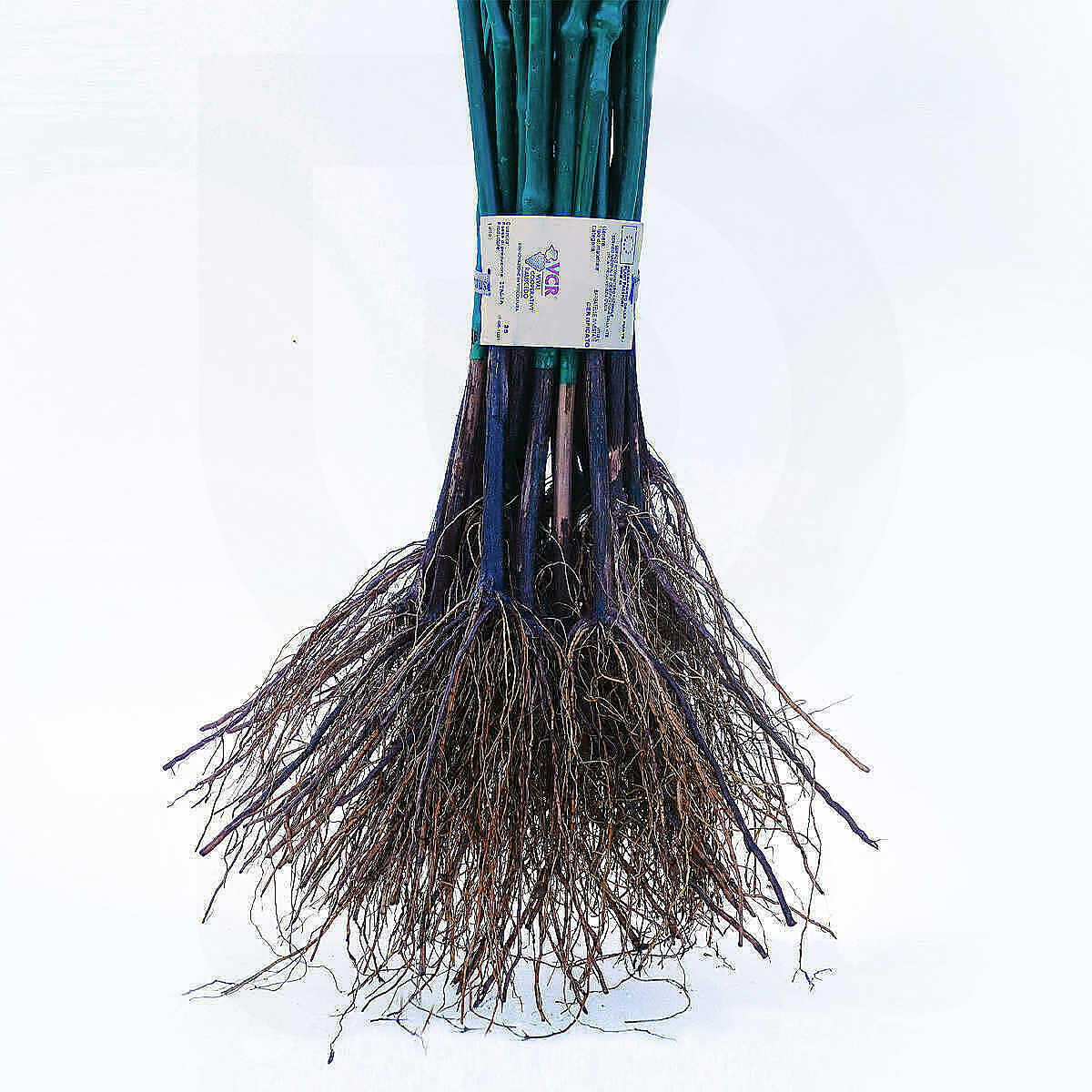
Abbuoto grafted vines (10 pcs)
Описание
 AUTHORIZED RETAILER
Abbuoto grafted vines (10 pcs)
Graft carrier 1103P - K5BB - S04 - 140RU - 420A (Graft carrier available at the time will be sent)
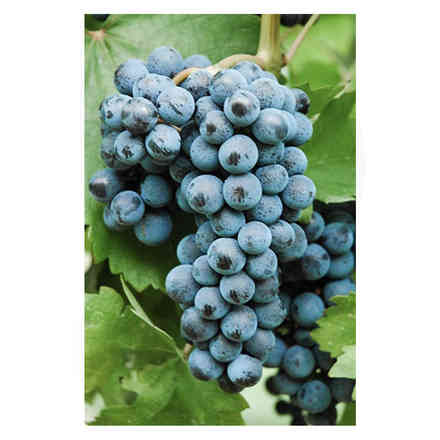
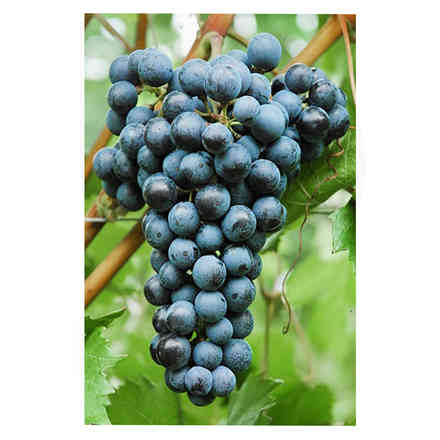
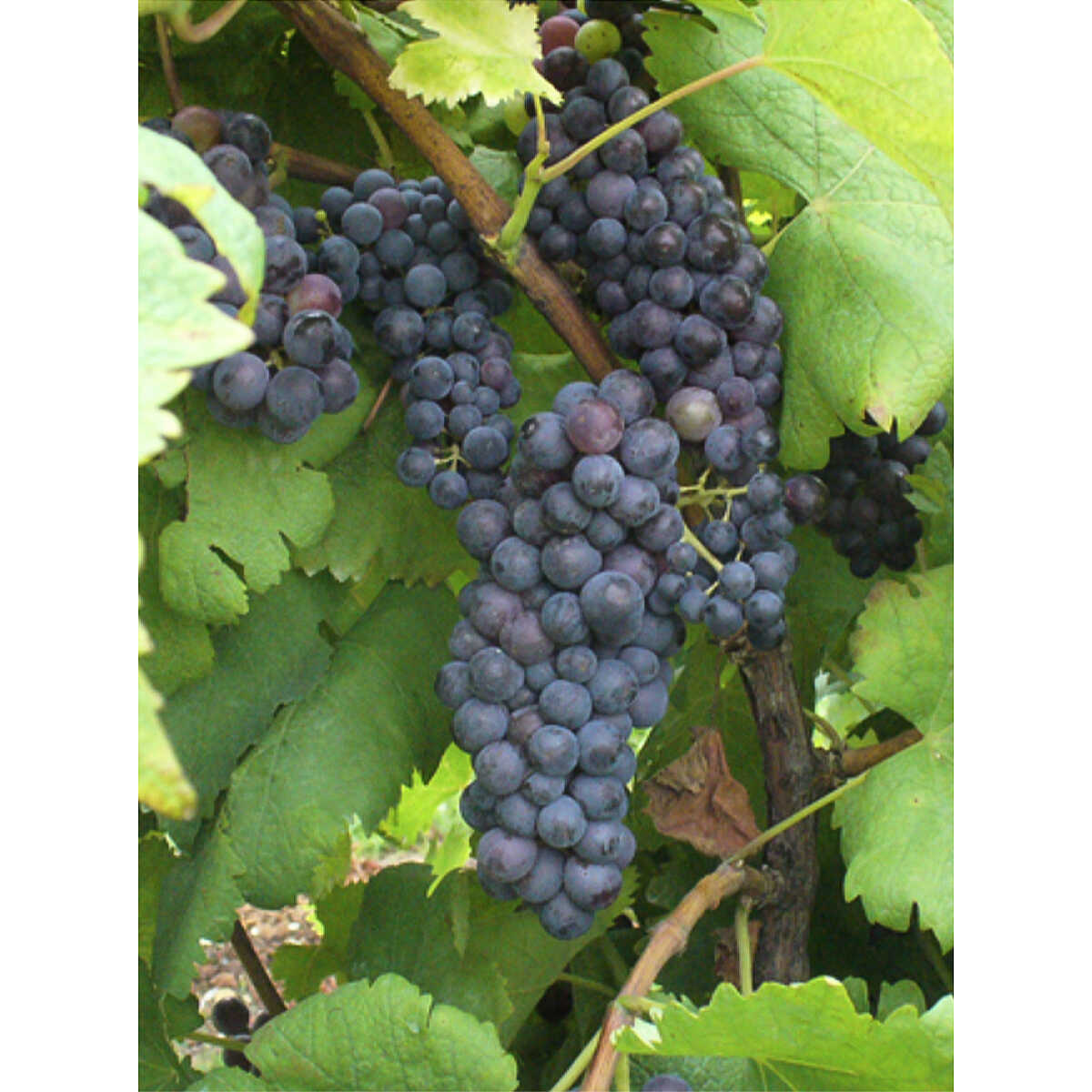
It is a native grape variety from Lazio, characterized by a medium-to-large cluster (about 300 g) and berries with thick, waxy skins of a black-violet color. The name probably derives from the local dialect abbuotare (“to fill, to satisfy”). The Abbuoto vine cutting represents the propagation material of one of the oldest and rarest native grape varieties of southern Lazio (area between Itri, Fondi and Sperlonga). It is a black-berried variety, often associated with the historic production of the wine “Cecubo”.
Ampelographic characteristics
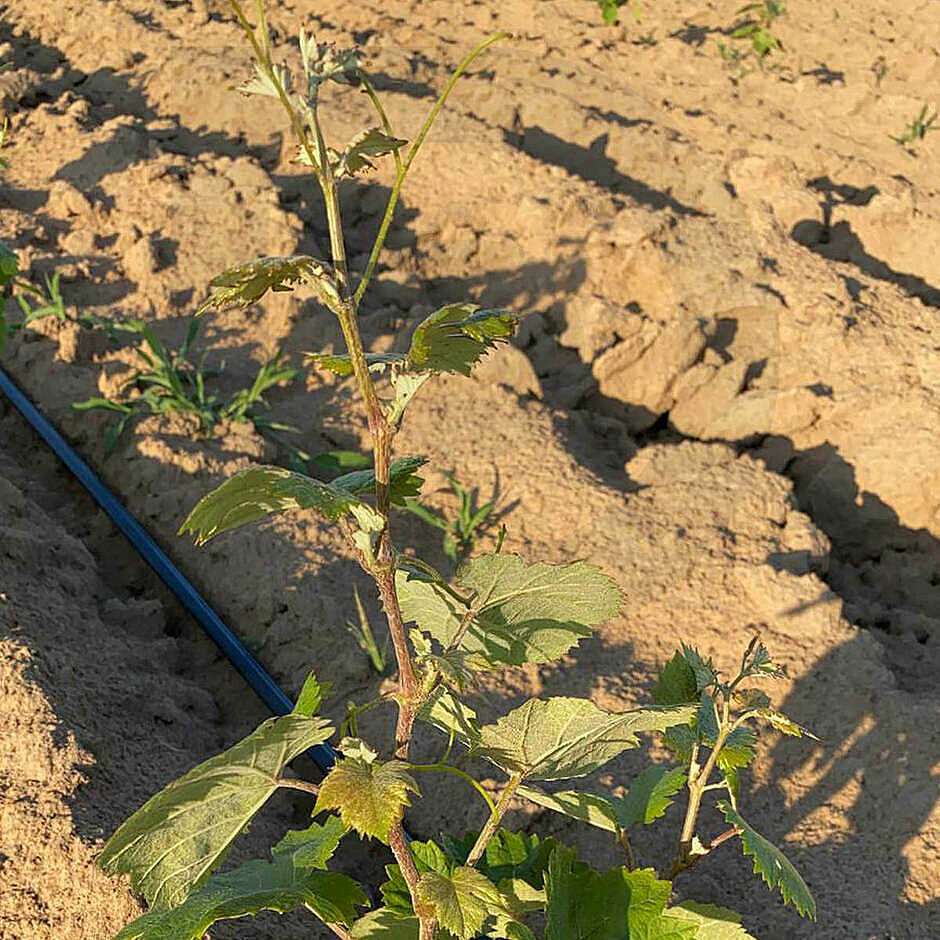
Shoot (10–20 cm):
- Tip: fan-shaped, woolly, whitish-green.
- Apical leaves (1st–3rd): gutter-shaped, woolly, yellow-green or bronzed, trilobed.
- Basal leaves (from 4th onward): expanded, almost glabrous, bronze-green.
- Shoot axis: glabrous, green with bronze shading, upright.
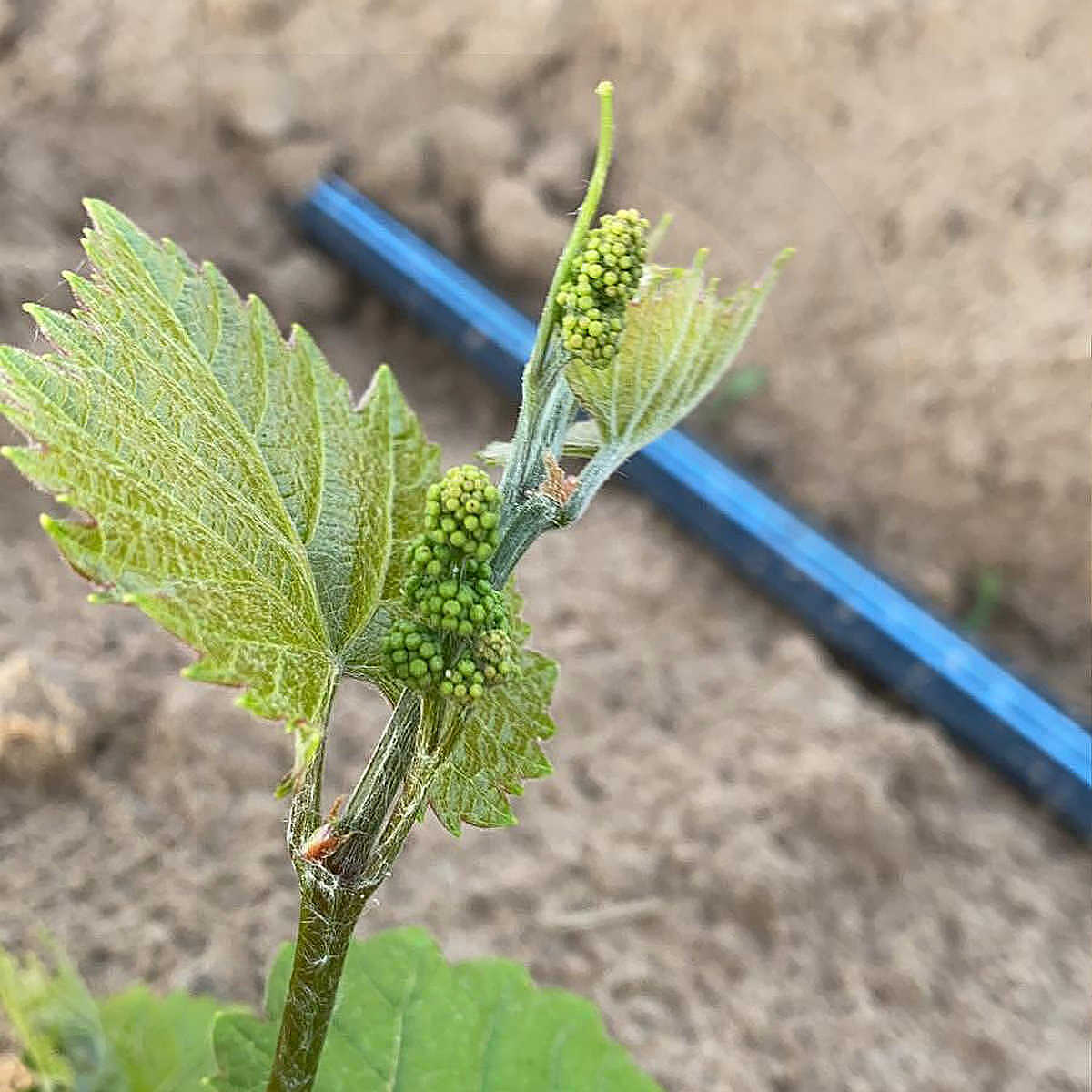
Shoot at flowering:
- Tip: fan-shaped, woolly, yellow-green.
- Apical leaves: slightly gutter-shaped, woolly, green-bronze.
- Basal leaves: expanded, almost glabrous, green-bronze.
- Shoot axis: glabrous, green with bronze shading, curved (shepherd’s crook).
- Herbaceous shoot: almost flattened cross-section, slightly ribbed, glabrous, green with brown-wine hues and streaks.
- Tendrils: intermittently distributed, bi-trifid, green with bronze shading at the base.
- Inflorescence: large, cylindrical-conical, semi-compact clusters, compact flowers, peduncle green with brown shading.
- Flower: floral bud medium-sized, globose, green corolla; open flower regular hermaphrodite.
- Leaf: rather large, pentagonal, five-lobed; petiolar sinus open U-shaped; upper lateral sinuses ellipsoidal, closed or semi-closed, fairly deep; lower lateral sinuses ellipsoidal, generally semi-closed, deep. Upper surface glabrous, green, blistered; lower surface glabrous. Blade wavy, lobes revolute; apex angles obtuse in the central lobe, acute in the lateral ones. Main veins on the lower surface green with pink shading, glabrous. Irregular teeth in 1, 2 or 3 series, medium-sized, with straight margins on one side and convex on the other, narrow base.
- Petiole: medium or long, thick, rounded cross-section, shallow channel, glabrous.
Autumn leaf coloration: yellowish, slightly mottled and spotted with crimson red, especially near the margins. - Cluster at technological maturity: fairly large, cylindrical-conical, sometimes with one or two wings, semi-compact, not subject to shatter; peduncle of medium length and thickness, semi-woody.
Berry: fairly large, sub-round, regular cross-section; skin fairly thick and firm, black-violet, waxy; navel fairly evident; pulp soft; juice colorless or slightly colored, neutral flavor. Pedicel medium in length and thickness, green-yellowish with slight pink shading. Berry separation from pedicel: easy.
Seeds: 1 to 3 per berry, fairly large, pear-shaped and slightly swollen, long beak, oval chalaza. - Woody cane: long, elliptical cross-section, smooth surface, hazelnut-brown bark, often with dark speckling, dense, regular and marked streaks; internodes of medium length; nodes moderately evident, same color or slightly purplish. Diaphragms of medium thickness; buds rather small, conical; tooth moderately protruding.
- Trunk: vigorous.
Phenology
- Exposure: south-facing, rows oriented east–west.
- Training system: spur-pruned cordon.
- Pruning: short.
- Plant spacing: 2.0 × 1.60 m.
- Soil: hilly, deep, clay-siliceous, loose, sub-acid (pH 6.7).
Vegetative phases
- Budburst: almost early.
- Flowering: normal period.
- Veraison: normal period.
- Wood maturation: almost early.
- Grape ripening: beginning of the normal period, first ten days of October.
- Leaf coloration and fall: normal period.
Characteristics and agronomic aptitude
- Vigor: prefers moderately expansive training systems and short pruning.
- Yield: medium to low and irregular.
- Position of first fruitful shoot: from the 4th or 5th node.
- Position and number of inflorescences per shoot: none or one at the first basal position; generally two on the others.
- Fertility of lateral shoots: none.
- Resistance to pests and diseases: high resistance to powdery mildew, slightly less to downy mildew; sensitive to late frosts.
- Behavior when grafted: normal.
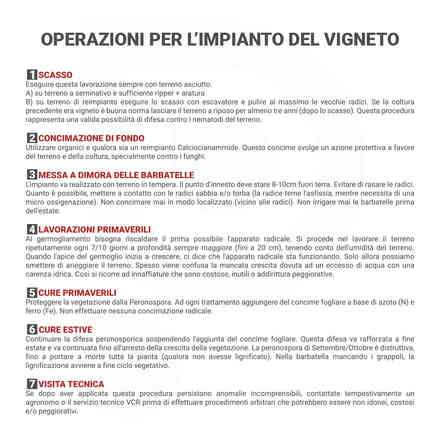
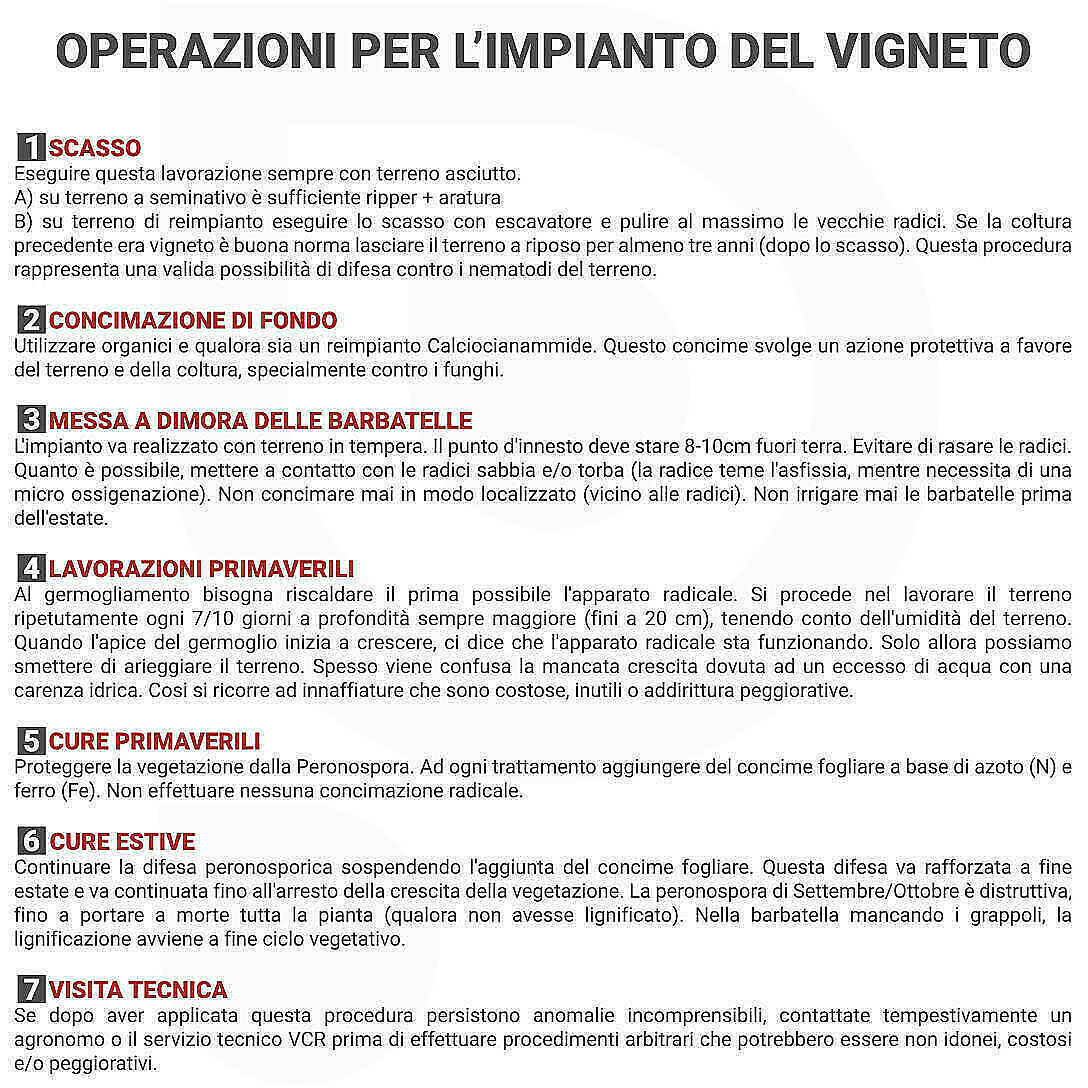
RULES TO PLANT A VINEYARD
1. PLOW
You must perform this operation always with dry soil
A) On arable land is generally sufficient to ripper + to plow
B) On planting soil is generally sufficient to plow with an escavator and to clean the old roots.
If the previous crop was a vineyard, it is a good idea to leave the soil fallow for at least three years (after plowing). This procedure represents a valid possibility of defence against soil nematodes.
2. SOIL FERTILIZATION
Use organics and if it is a reimplantation, use Calciumocyanamide.
This fertiliser has a protective effect on the soil and the crop, especially against fungi.
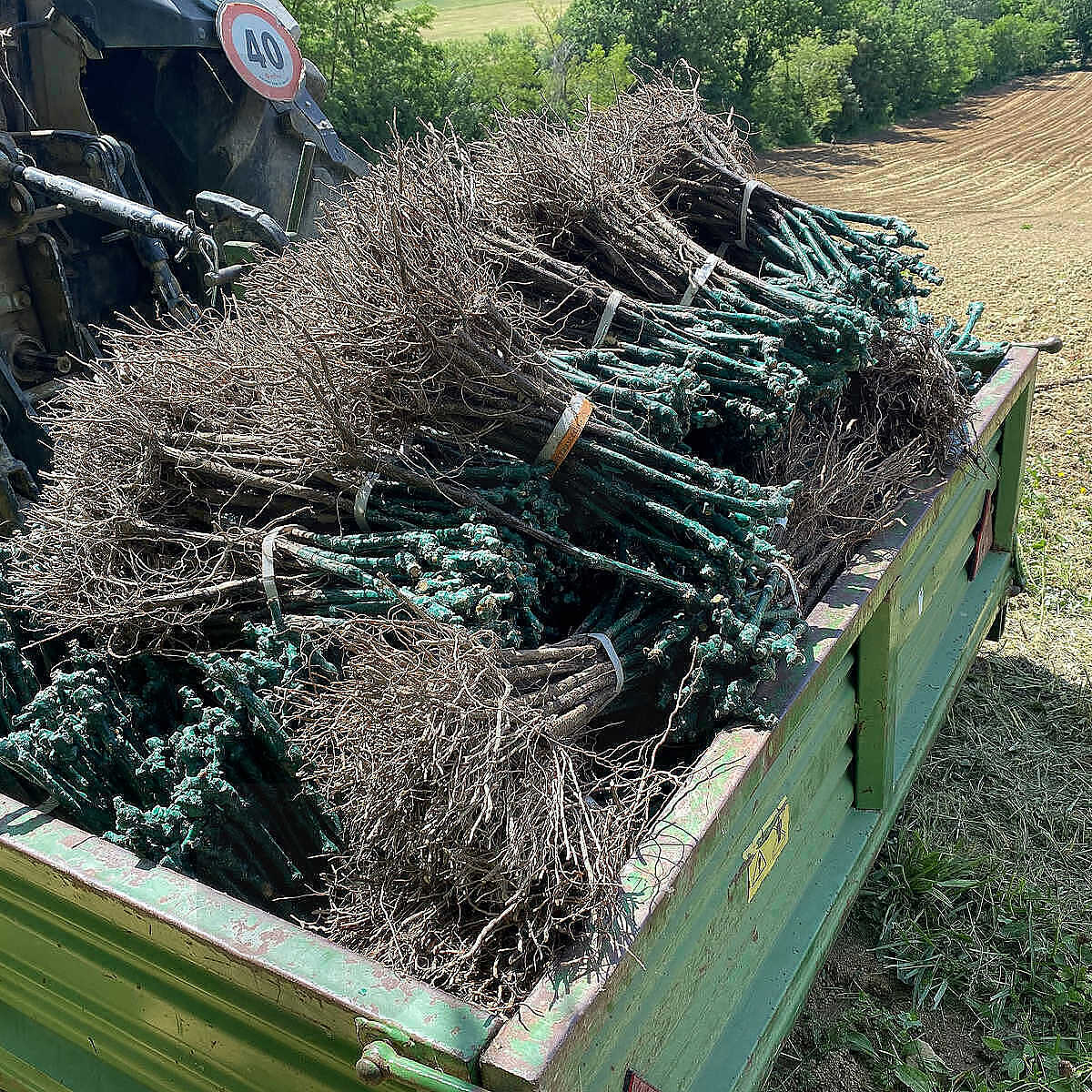
3.PROPAGATING GRAPE VINE CUTTINGS
The planting should be carried out in temperate soil. The grafting point should be 8-10 cm above ground. Avoid shaving the redices. As much as possible, put sand and/or peat in contact with the roots (the root fears asphyxiation, while it needs a micro-oxygenation). Never fertilize in a localized manner (near the roots). Never water the rooted cuttings before summer.
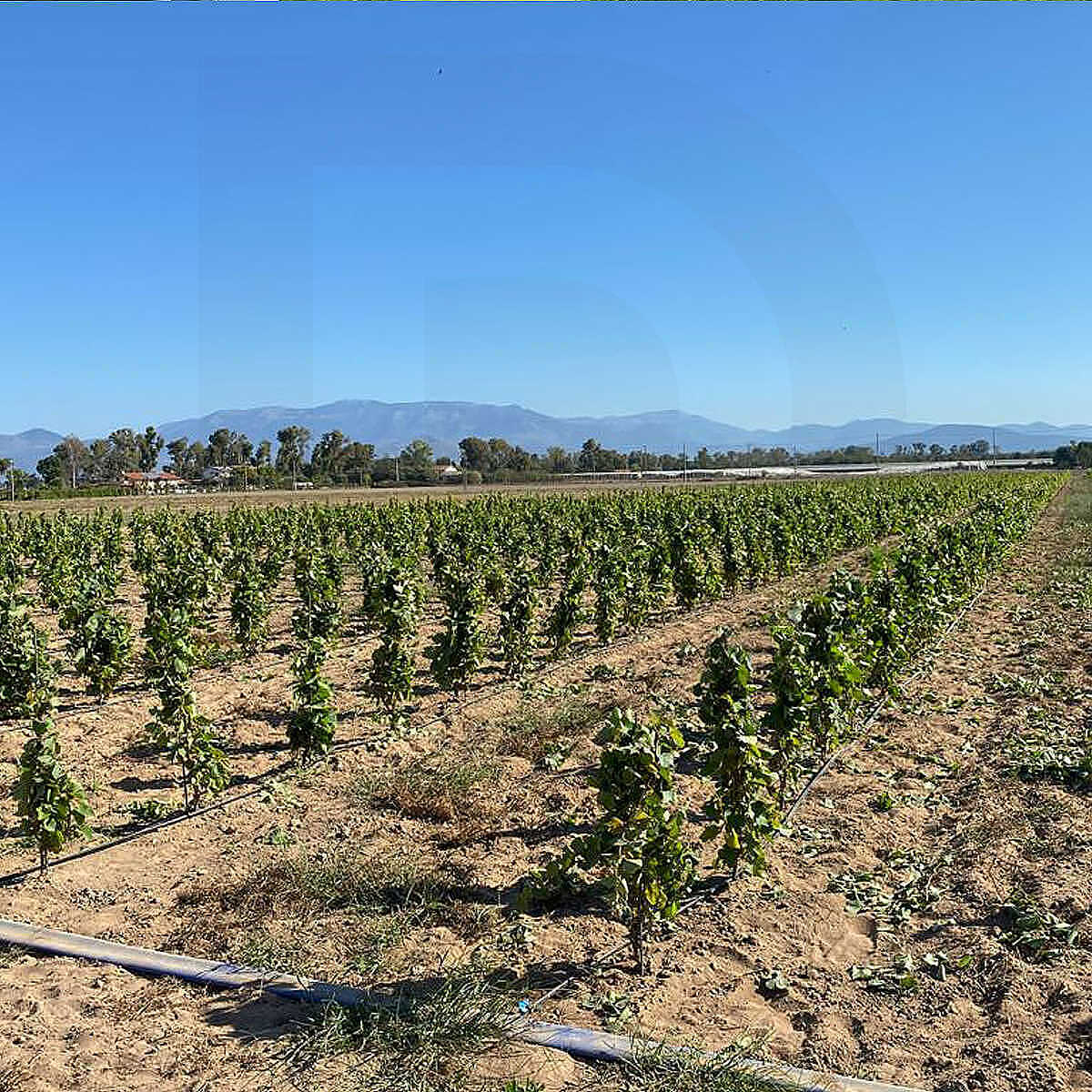
4.SPRING WORKS
When sprouting, the root apparatus must be heated as soon as possible. Work the soil repeatedly every 7/10 days at increasing depth (up to 20 cm), taking into account the moisture of the soil. When the apex of the bud starts to grow, it means that the root system is functioning. Only then can we stop watering the soil. Failure to grow due to access to water is often confused with a lack of water. This is why watering is used which is expensive, useless or even worse.
5.SPRING CURE
Protect vegetation from Peronospora. To each treatment add nitrogen (N) and iron (Fe) foliar fertilizer. Do not make any radical fertilization.
6.SUMMER CURE
Continue with the defense against Peronospora by suspending the addition of the foliar fertilizer. This defense should be reinforced in late summer and should be continued until vegetation growth stops.
The September/October blight is destructive, to the point of bringing death to the whole plant (if it has not lignified). The rooted vine lacks clusters, so lignification occurs at the end of the vegetative cycle.
7.TECHNICAL VISIT
If incomprehensible anomalies persist after this procedure, contact an agronomist or the VCR Technical Service promptly before carrying out arbitrary procedures which may be unsuitable, expensive and/or worsening.