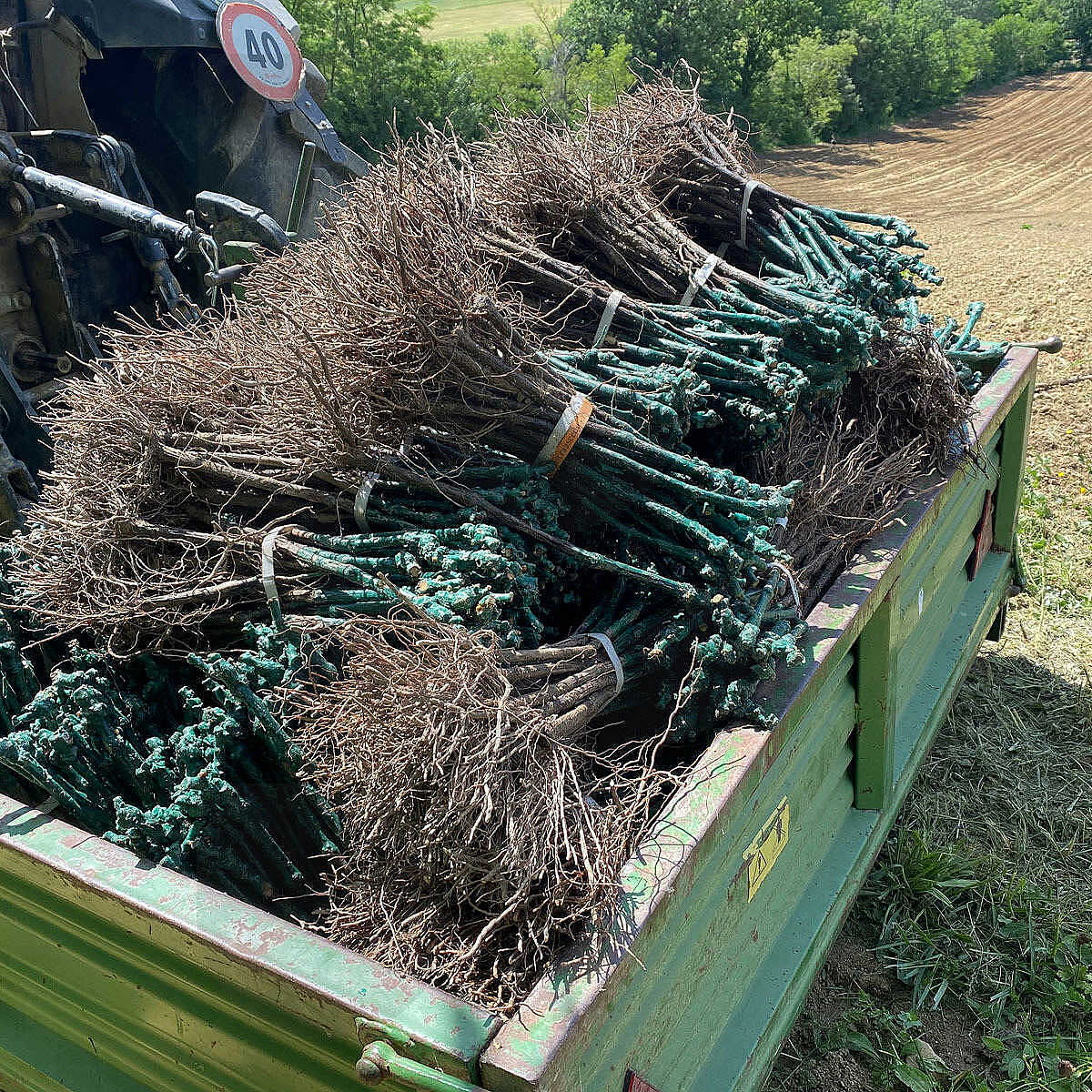
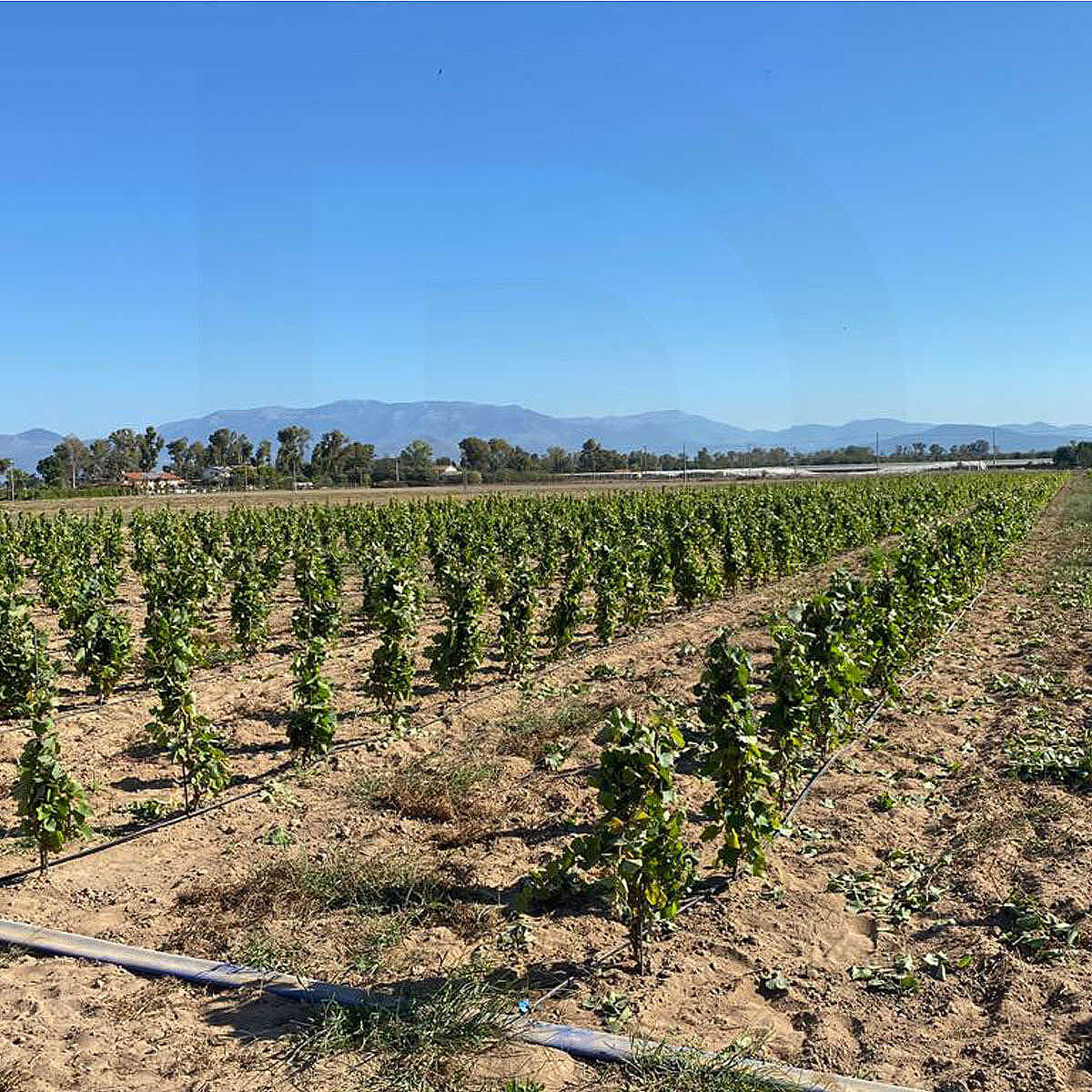
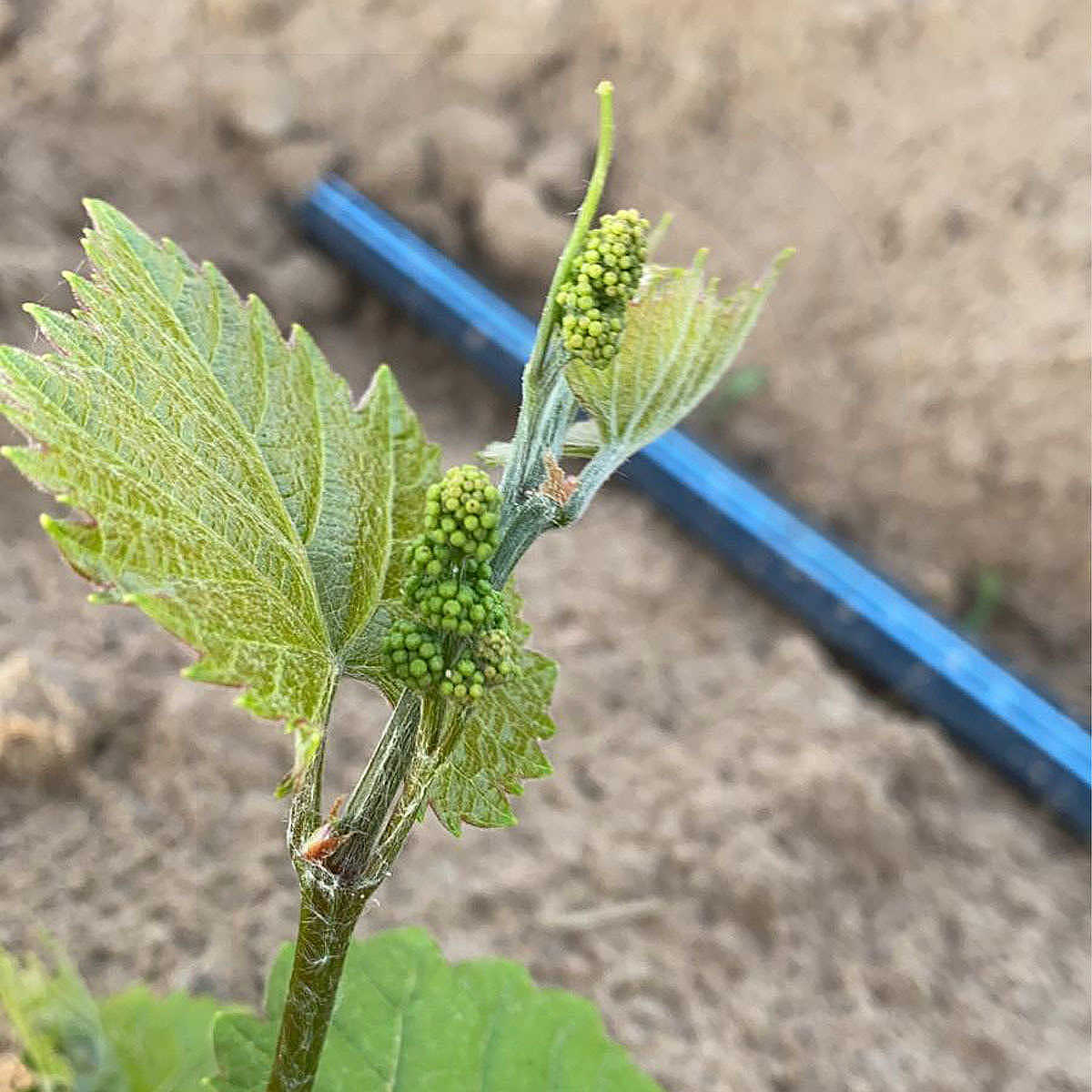
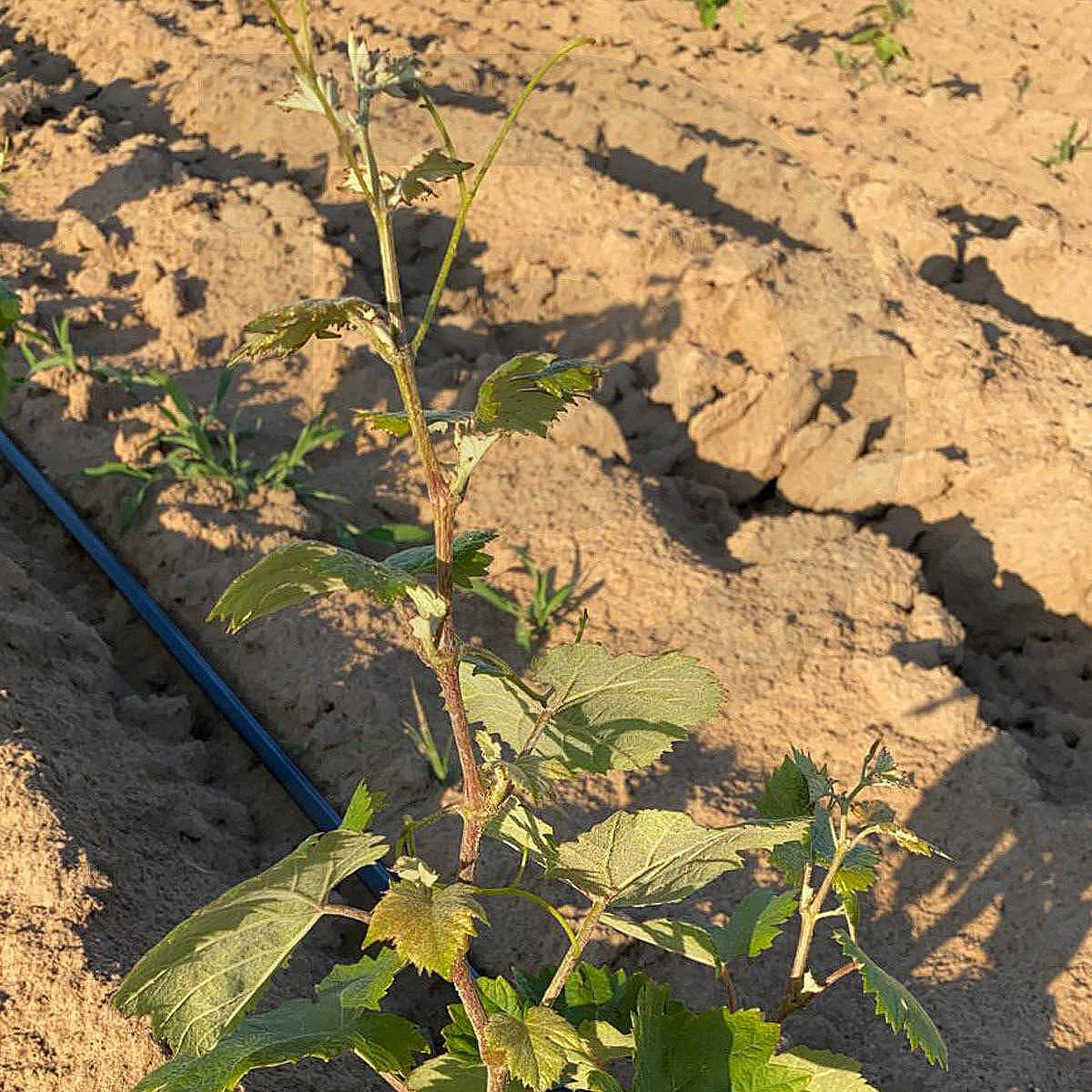
Reale Bianca grafted vines (25 pcs)
Description
 AUTHORIZED RETAILER
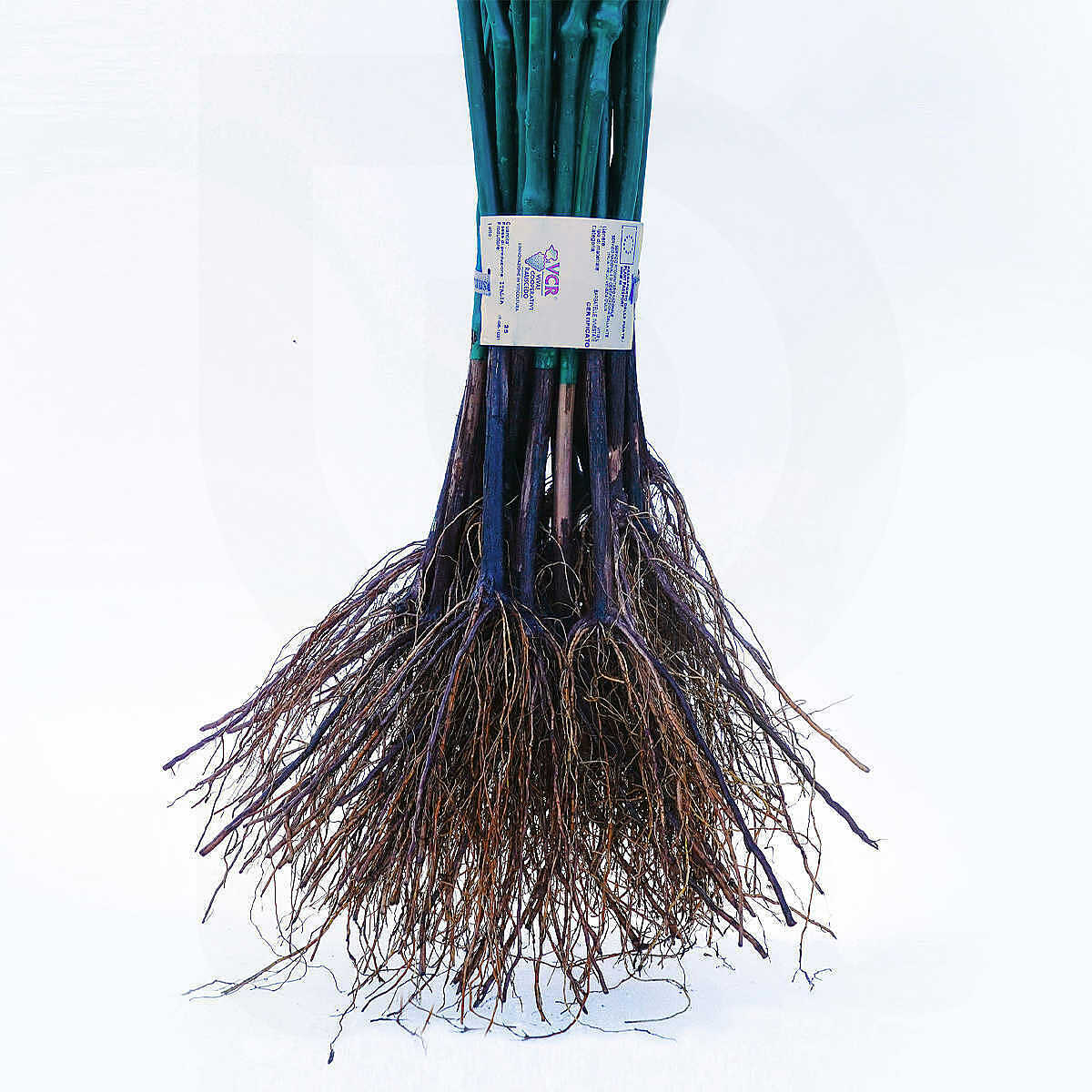
Reale Bianca grafted vines (25 pcs)
Rootstocks: 1103P - K5BB - S04 - 140RU - 420A (We will send you the graft carrier available at the time)
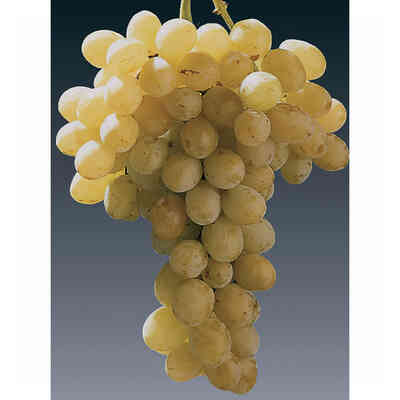
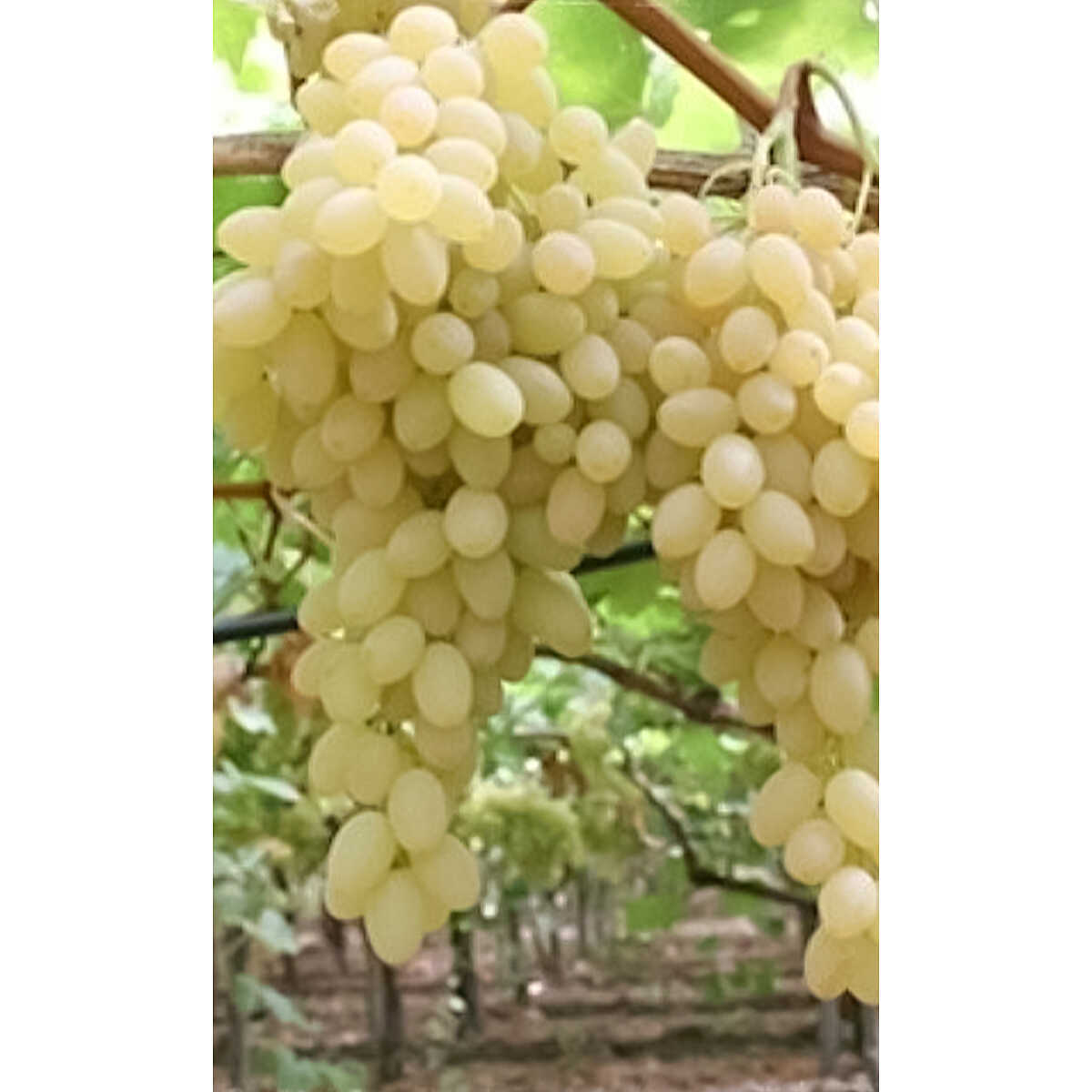
The origins of Reale Bianca are unknown: field surveys and information gathered from growers indicate that it has been cultivated in the area for over a century. The production area is limited to the municipality of Esperia and marginally to that of Pontecorvo. The surface area cultivated with Reale Bianca is estimated at approximately five hectares. The variety proposed for registration is grown in a restricted area corresponding to portions of the municipalities of Esperia and Pontecorvo in the province of Frosinone.
Ampelographic Characteristics:
Shoot:
- Tip opening (30–60 cm): fully open
Anthocyanin pigmentation of prostrate hairs at the tip: absent
Density of prostrate hairs at the tip: medium-high
Growth habit (before tying): semi-erect
Color of dorsal side of internodes: green
Color of ventral side of internodes: green
Anthocyanin pigmentation of bud scales: absent
Tendrils:
- Number of consecutive tendrils: 2 or fewer
Young leaf (first six leaves at flowering):
- Upper side color of blade (4th leaf): green
- Density of prostrate hairs between main veins on lower side (4th leaf): medium-high
Mature leaf:
- Blade size: small
- Blade shape: orbicular-pentagonal
- Number of lobes: one to five
- Upper side color: dark green
- Anthocyanin pigmentation on main veins (upper side): absent
- Anthocyanin pigmentation on main veins (lower side): absent
- Blade depressions: absent or very weak
- Blade waviness between main or secondary veins: absent
- Blade profile in cross-section: flat
- Blistering of upper side: high
- Tooth shape: both sides convex
- Tooth length/width ratio: medium
- Petiole sinus opening/overlap: very overlapping
- Petiole sinus base shape: V-shaped
- Petiole sinus base delimited by veins: not delimited
- Density of prostrate hairs between main veins (lower side): medium
- Density of prostrate hairs on petiole: none or very low
- Density of erect hairs on petiole: high
- Depth of upper lateral sinuses: absent or very shallow to medium
Inflorescence:
- Sex organs: reflexed stamens and fully developed pistil
- Insertion level of first inflorescence: low
- Number of inflorescences per shoot: 1.1 to 2
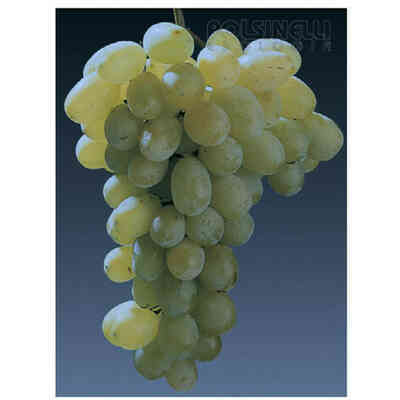
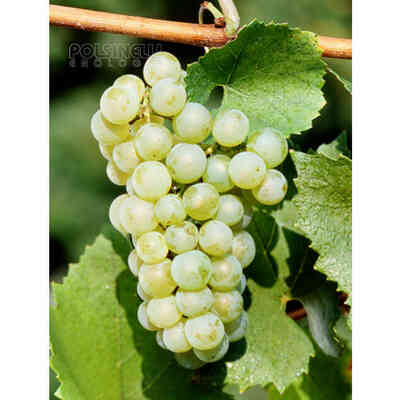
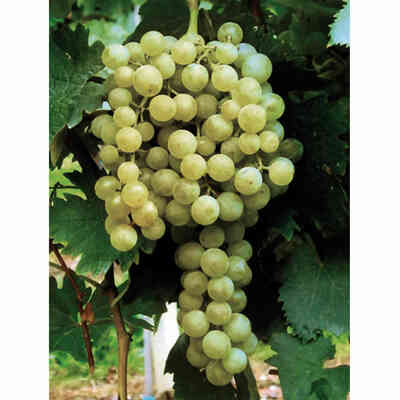
Bunch:
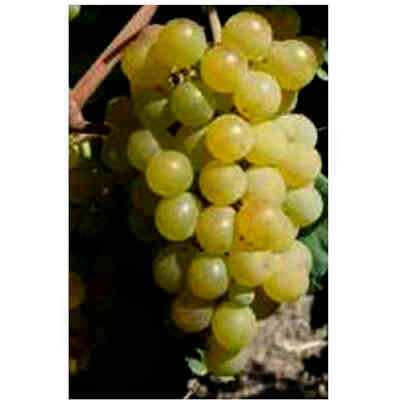
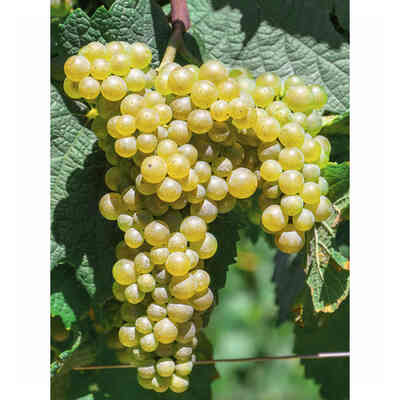
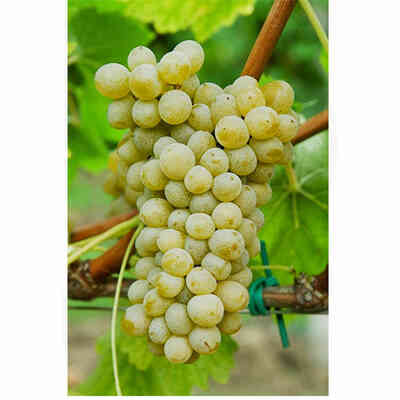
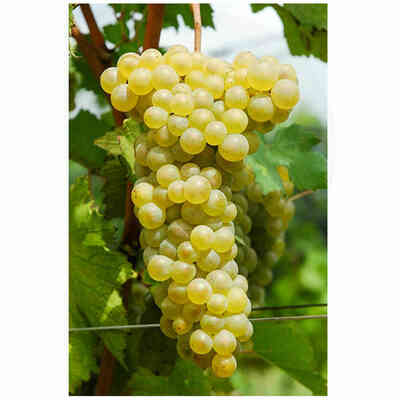
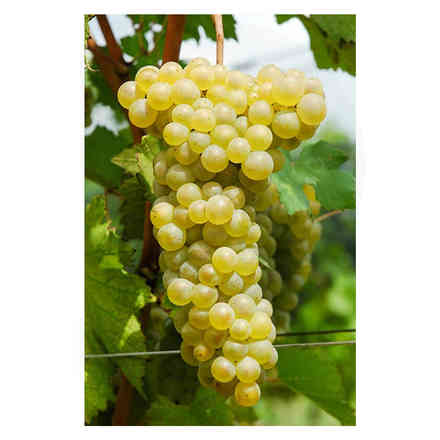
- Length (excluding peduncle): medium
- Width: medium-narrow
- Compactness: medium
- Peduncle length: short (approx. 50 mm), medium (approx. 50 mm)
- Peduncle lignification: up to about half
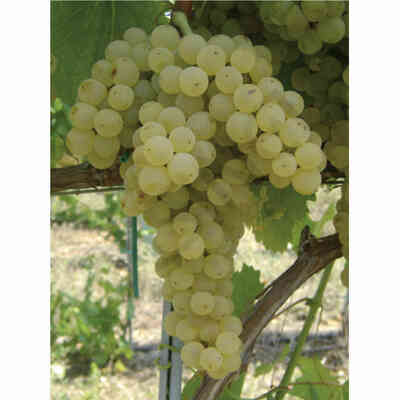
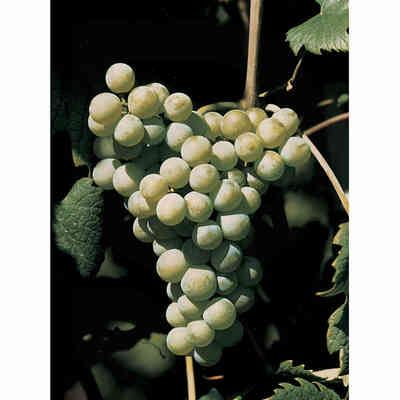
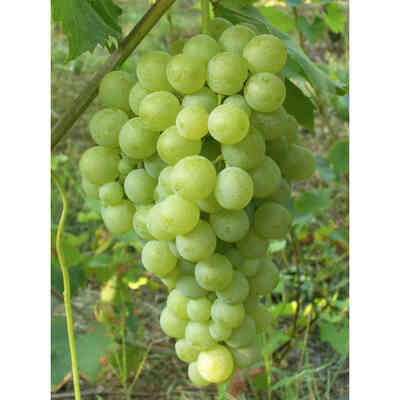
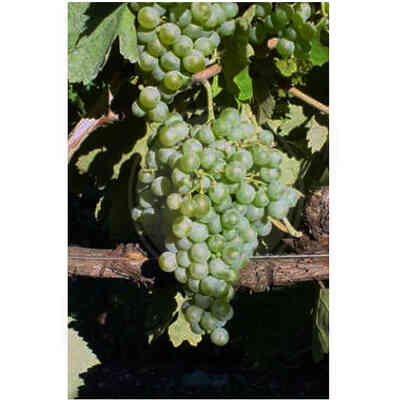
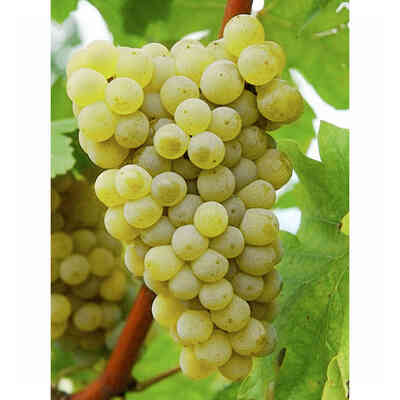
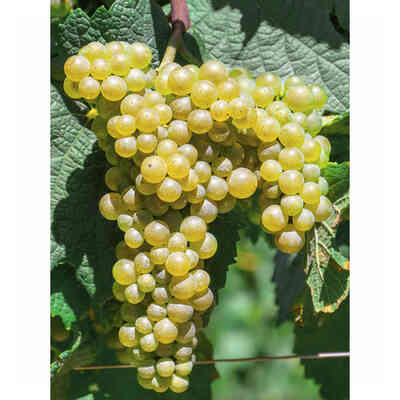
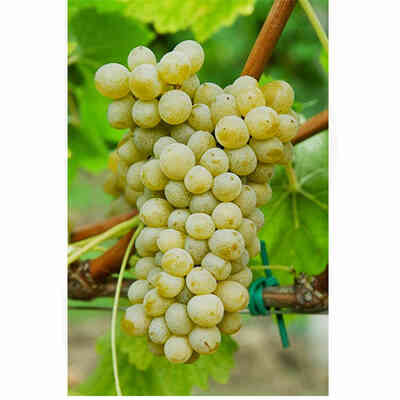
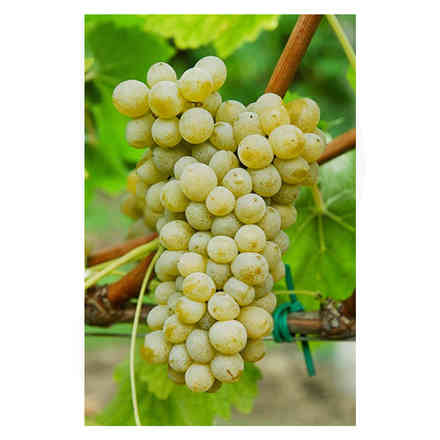
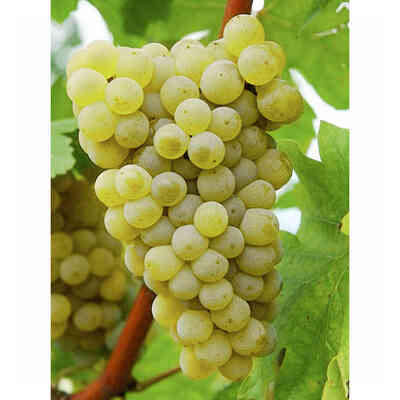
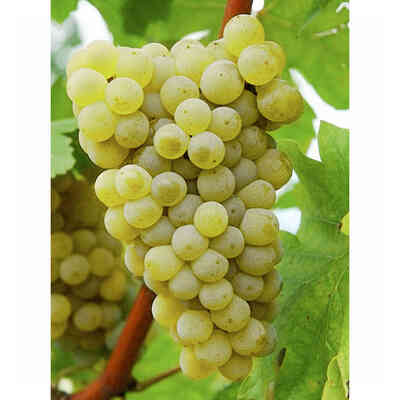
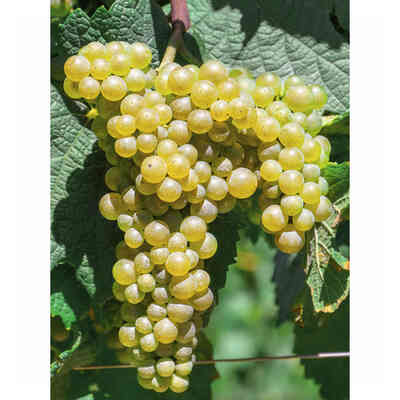
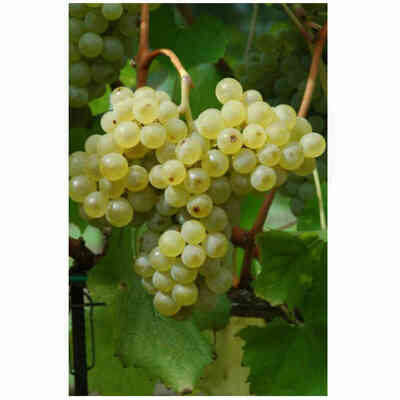
- Shape: conical
- Number of wings: absent
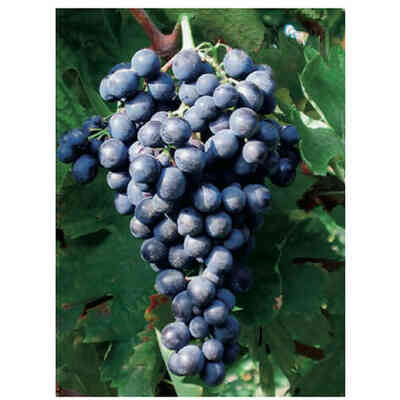
Berry:
- Length: medium (approx. 18 mm)
- Width: medium (approx. 18 mm)
- Shape: spheroid
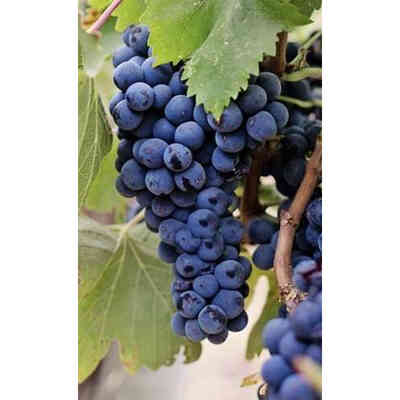
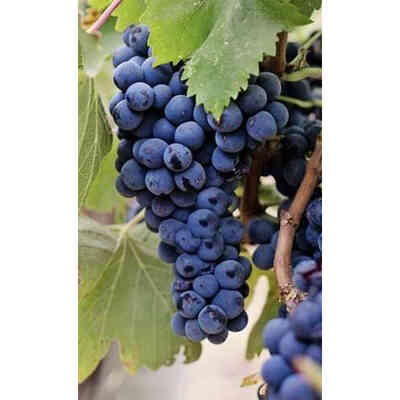
- Skin color: yellow-green
- Bloom: none or very weak
- Skin thickness: thick
- Hilum: slightly noticeable
- Anthocyanin pigmentation of flesh: none or very weak
- Flesh firmness: slightly firm
- Particular flavor: none
- Seed development: complete
Phenology:
- Bud break: one week earlier than reference variety (Trebbiano Toscano)
- Flowering: one week earlier
- Veraison: one week earlier
- Ripening: one week earlier
Production data:
- Actual fertility (no. inflorescences/shoot): 1.49
- Average bunch weight (g): 215
- Average berry weight (g): 3.6
- Pruning wood weight (g/vine): 1,110
- Ravaz Index: 3.32
- Sugars (°Brix): 19.75
- pH: 3.42
- Total acidity (g/l): 6.27
- Tartaric acid (g/l): 3.15
- Malic acid (g/l): 2.37
Characteristics:
Resistance (macroscopic aspects)
- To adverse environmental conditions: Excellent (as Trebbiano Toscano)
- To harmful organisms: Excellent (as Trebbiano Toscano)
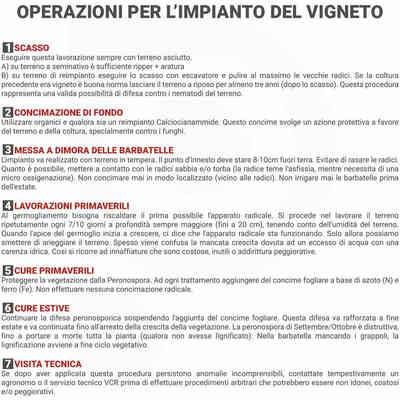
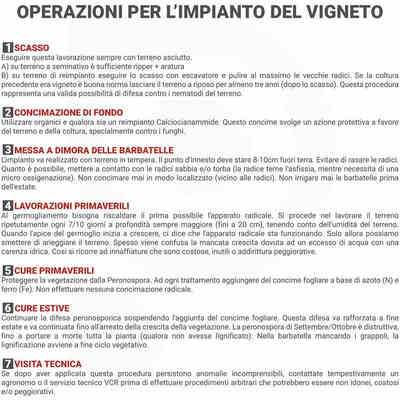
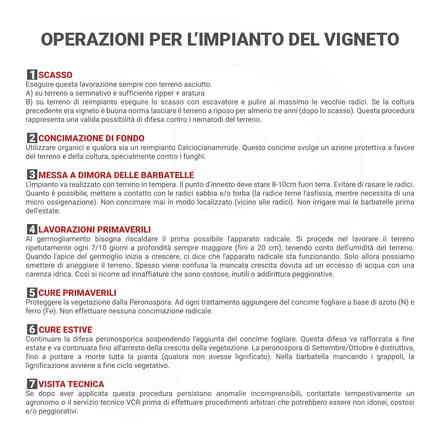
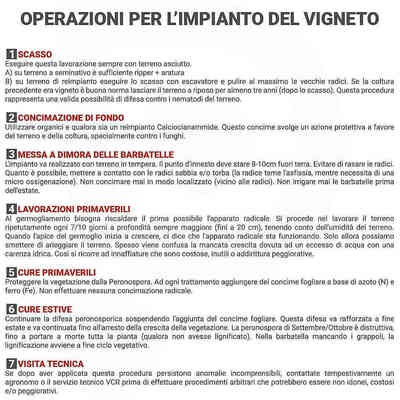
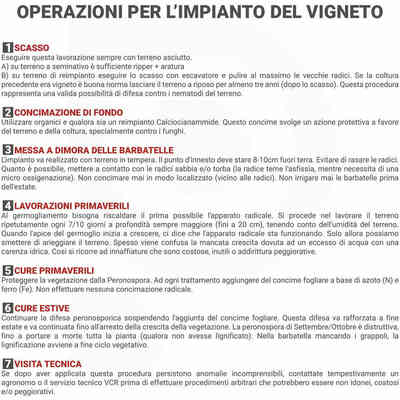
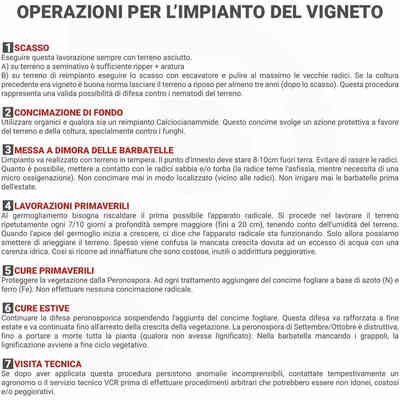
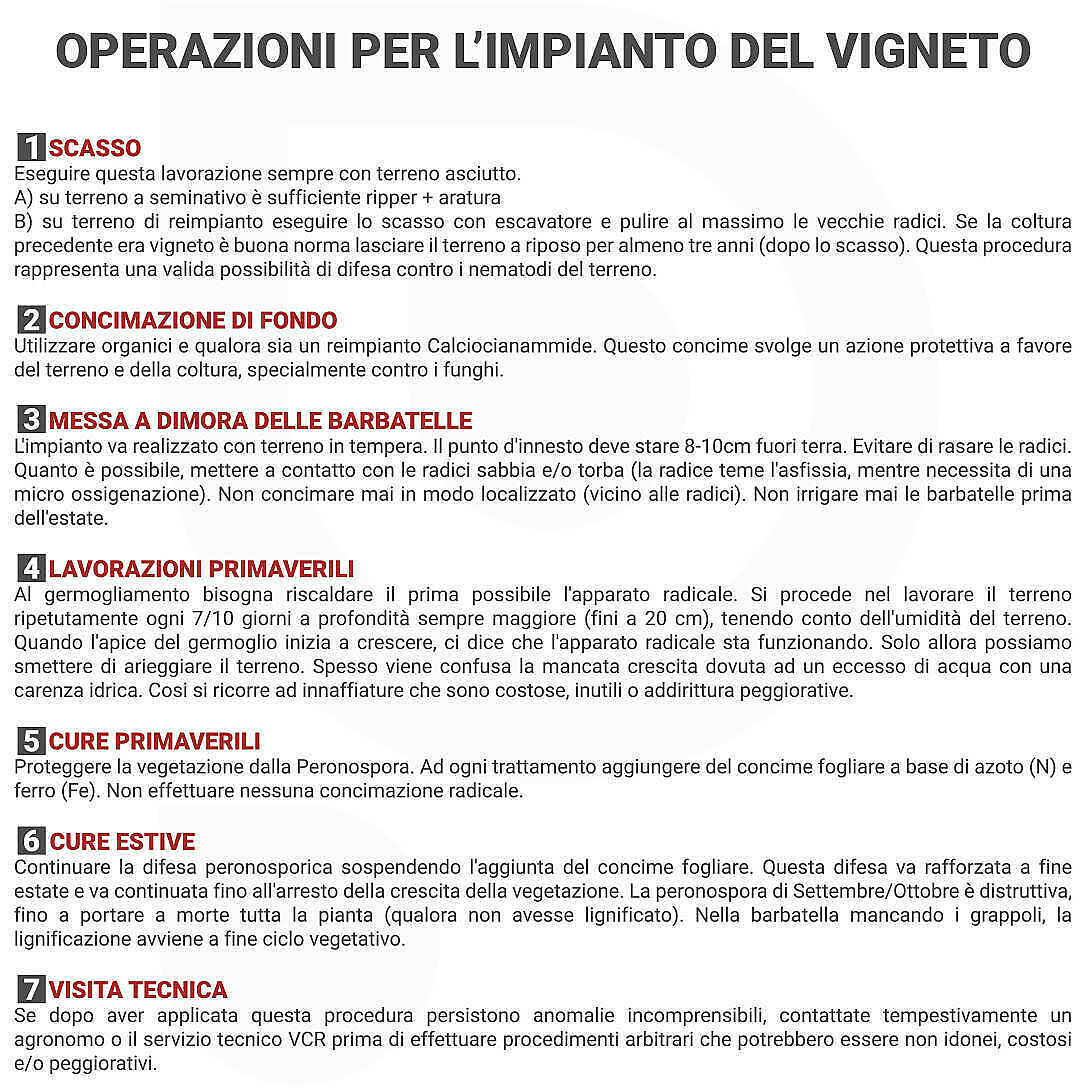
RULES TO PLANT A VINEYARD
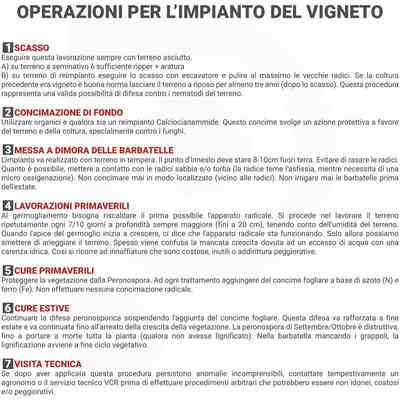
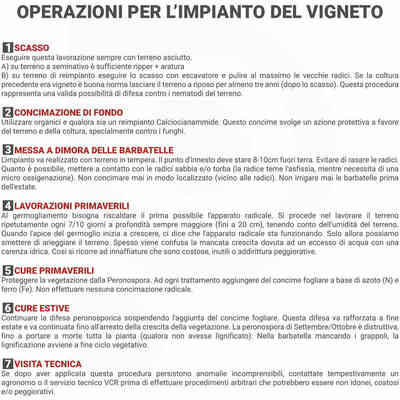
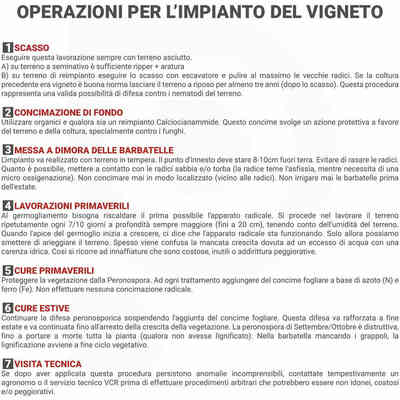
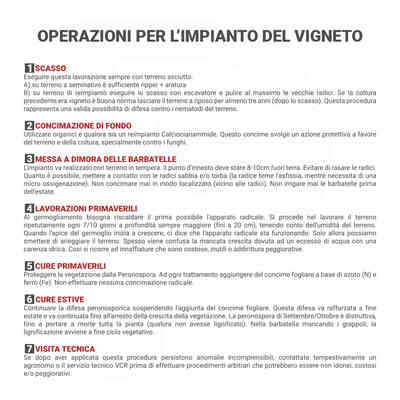
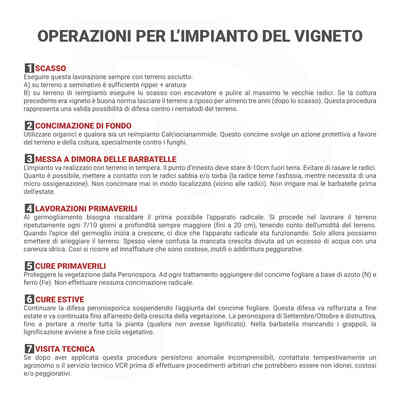
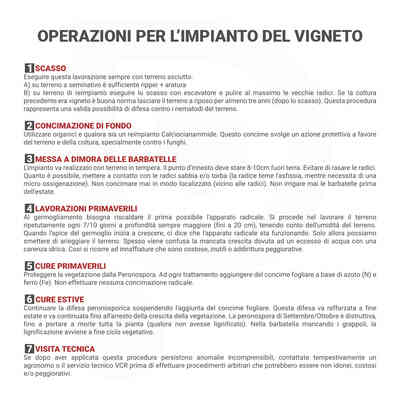
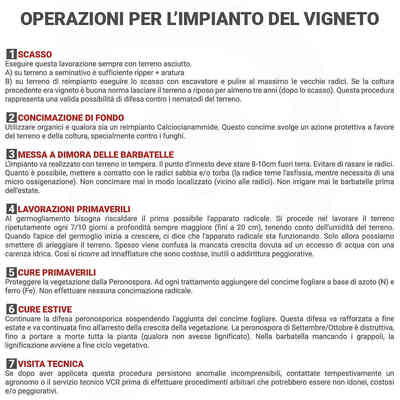
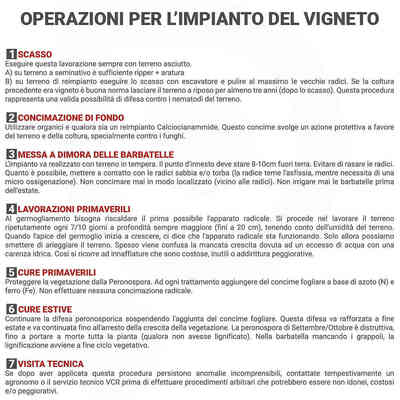
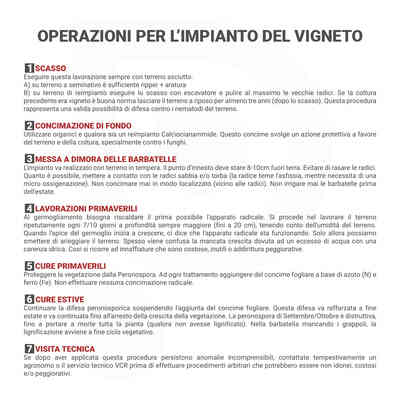
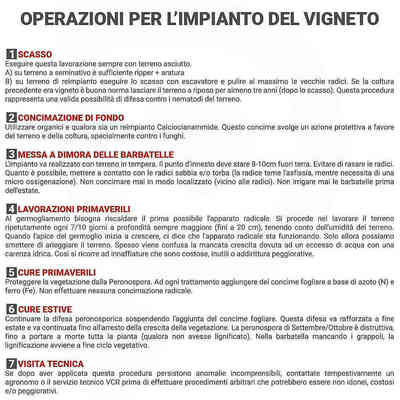
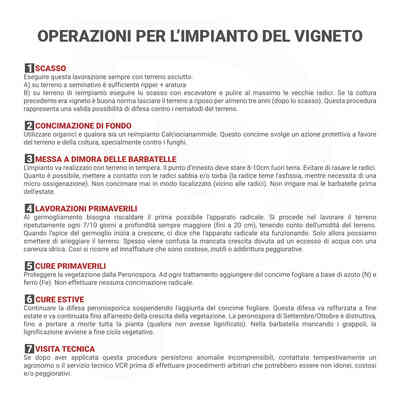
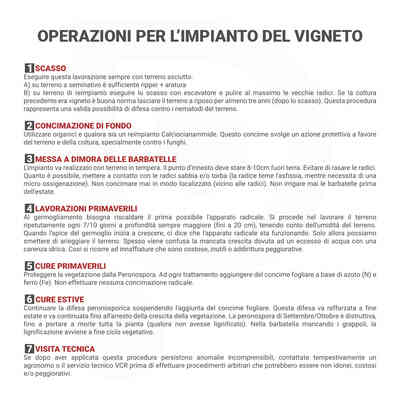
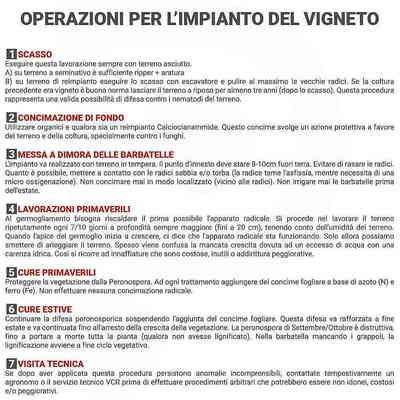
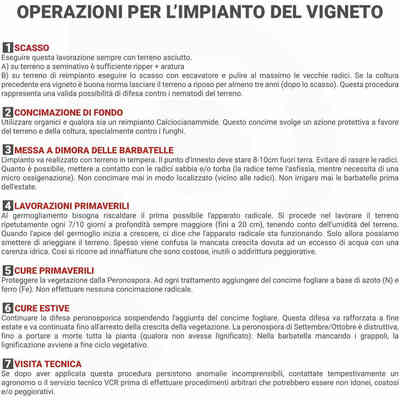
1. PLOW
You must perform this operation always with dry soil
A) On arable land is generally sufficient to ripper + to plow
B) On planting soil is generally sufficient to plow with an escavator and to clean the old roots.
If the previous crop was a vineyard, it is a good idea to leave the soil fallow for at least three years (after plowing). This procedure represents a valid possibility of defence against soil nematodes.
2. SOIL FERTILIZATION
Use organics and if it is a reimplantation, use Calciumocyanamide.
This fertiliser has a protective effect on the soil and the crop, especially against fungi.
3.PROPAGATING GRAPE VINE CUTTINGS
The planting should be carried out in temperate soil. The grafting point should be 8-10 cm above ground. Avoid shaving the redices. As much as possible, put sand and/or peat in contact with the roots (the root fears asphyxiation, while it needs a micro-oxygenation). Never fertilize in a localized manner (near the roots). Never water the rooted cuttings before summer.
4.SPRING WORKS
When sprouting, the root apparatus must be heated as soon as possible. Work the soil repeatedly every 7/10 days at increasing depth (up to 20 cm), taking into account the moisture of the soil. When the apex of the bud starts to grow, it means that the root system is functioning. Only then can we stop watering the soil. Failure to grow due to access to water is often confused with a lack of water. This is why watering is used which is expensive, useless or even worse.
5.SPRING CURE
Protect vegetation from Peronospora. To each treatment add nitrogen (N) and iron (Fe) foliar fertilizer. Do not make any radical fertilization.
6.SUMMER CURE
Continue with the defense against Peronospora by suspending the addition of the foliar fertilizer. This defense should be reinforced in late summer and should be continued until vegetation growth stops.
The September/October blight is destructive, to the point of bringing death to the whole plant (if it has not lignified). The rooted vine lacks clusters, so lignification occurs at the end of the vegetative cycle.
7.TECHNICAL VISIT
If incomprehensible anomalies persist after this procedure, contact an agronomist or the VCR Technical Service promptly before carrying out arbitrary procedures which may be unsuitable, expensive and/or worsening.